


Wasp Removal & Wasp Control in Camberwell
Wasp activity around a property often begins with a pattern rather than an obvious nest. You may notice insects repeatedly passing beneath an eave, moving through a gap beside the roofline, hovering around a garden structure or disappearing into a sheltered area. When the same movement continues, there may be an established colony nearby.
Wasps Control Melbourne provides professional wasp removal in Camberwell for homes and commercial premises. We focus on locating the source of the activity, assessing how the wasps are entering and leaving the nesting area, and determining a suitable treatment based on the conditions found at the property.
Professional wasp control in Camberwell is especially worthwhile when insects are active near entrances, outdoor living spaces, garages, gardens or frequently used areas. Treating the colony at its source is more effective than continually dealing with individual wasps appearing around the property.
Wasp Activity Around Homes and Gardens
Properties can offer wasps many protected places in which to establish a nest. Eaves, roof spaces, wall cavities, garages, sheds and gaps around exterior structures can provide shelter, while gardens and outdoor areas may attract wasps searching for food or nesting locations.
Some nests remain easy to see. Others may be completely concealed, with only an entry point giving away their presence.
Regular insect traffic is therefore important to recognise. Wasps repeatedly entering one roof gap, travelling towards a fence, disappearing into dense vegetation or circling around the same section of a building can indicate an active wasp nest.
Avoid approaching closely just to confirm what is there. Watching the general flight direction from a safe position can provide enough information for a professional assessment.
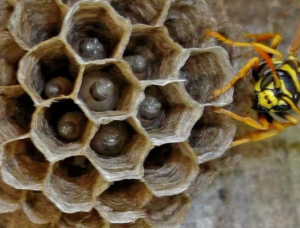
Common Nesting Areas That Deserve Attention
A wasp colony does not need a large exposed space to become established.
Around residential and commercial properties, potential nesting areas can include:
- Roof voids and sheltered eaves
- Wall cavities and small exterior openings
- Garages, carports and garden sheds
- Fences and protected garden structures
- Trees, shrubs and dense vegetation
- Areas underneath outdoor structures
- Building edges around commercial premises
The exact location can affect how wasp nest removal is approached. A clearly visible nest attached beneath an outdoor structure presents a different situation from a colony hidden inside a wall.
This is why professional inspection should come before treatment wherever the nesting position is uncertain.
Identifying the Type of Wasp Present
Not every wasp species behaves or nests in the same way.
The European wasp is an important species to identify because colonies can establish in concealed locations and may become defensive when disturbed. Their activity may be noticed well before the main nest structure becomes visible.
Mud wasps behave differently and often create distinctive mud-based nesting cells around sheltered areas. Other wasp species may construct exposed nests that can be identified by their shape, location and activity.
People may also use the phrase wasp hornet when describing a large or unfamiliar stinging insect. Rather than relying solely on appearance, a professional assessment considers how the insects behave and where they are nesting.
Accurate identification helps determine the appropriate wasp pest control approach for the property.
Wasp Nest Treatment Begins With the Colony
Effective treatment should address the active colony, not only the insects flying in the open.
The nesting location, level of activity and accessibility are assessed before wasp nest treatment begins. This helps determine how the colony can be controlled while limiting unnecessary disturbance around the nest.
Where an exposed nest is accessible and removal is suitable, wasp nest disposal may be considered after the activity has been dealt with.
Concealed colonies require more careful assessment. A nest inside an eave, wall cavity or roof space may not be physically reachable without interfering with parts of the building. In these cases, the immediate priority is controlling the colony rather than attempting to pull apart the structure.
Professional wasp nest activity is therefore based on the whole nesting situation rather than simply removing whatever material can be seen.
The Problems With Disturbing a Nest Yourself
Direct interference can cause an otherwise contained wasp problem to become more hazardous.
Striking a nest, attempting to scrape it away, spraying from close range or blocking an active entrance may trigger defensive behaviour. Wasps can react rapidly when their colony is disturbed, and some species are capable of stinging more than once.
The risk is greater when a nest is above head height, concealed in a building or positioned where moving away quickly would be difficult.
DIY treatment can also fail to reach the main colony. Several visible insects may be removed while the majority remain protected inside the nesting site.
Using a professional wasp exterminator allows the nest location and activity to be assessed before treatment is undertaken.
Wasp Control Around Frequently Used Areas
The location of the nest is often just as important as its size.
A colony beside a back door, garage entrance, garden path or outdoor entertaining area can interfere with how people use the property. Even when the insects are not actively approaching people, regularly passing close to their flight path increases the likelihood of accidental disturbance.
At commercial premises, wasps may also become a concern around entrances, exterior work areas, storage spaces or sections accessed by staff and visitors.
Residential and commercial wasp control services are intended to identify the source of these problems and treat the colony rather than allowing the activity to continue around occupied areas.
For property owners searching for wasp pest control near me, a service that investigates the nesting source provides a more targeted approach than treating insects individually.
Safe Steps to Take When a Nest Is Suspected
Keep your distance and avoid changing the area around the suspected nest until the activity has been assessed.
Do not seal a hole if wasps are regularly entering and leaving it. Blocking their normal route may cause them to search for another way out, particularly when the nest is inside part of a building.
If activity is occurring around vegetation, avoid trimming or cutting directly beside the nesting area. The same applies to moving stored items, carrying out roof maintenance or working around a shed where wasps are repeatedly entering.
Children and pets should be kept away from the immediate area where practical.
If the nest itself cannot be seen, make a note of where the insects disappear. This can help narrow down the source during an inspection.
Practical Wasp Prevention Around the Property
Reducing food sources and potential nesting opportunities can make a property less attractive to foraging wasps.
Outdoor rubbish bins should be kept closed, particularly where food waste is present. Clean up food scraps and sugary drink spills after outdoor meals, as these can attract wasps searching for food.
Accessible eaves, garages, sheds and outdoor structures can also be inspected occasionally for early nest development.
Where exterior gaps need repair, confirm first that they are not being used by active wasps. Closing an occupied entrance can create a new problem rather than resolving the existing one.
Regular property maintenance cannot prevent every wasp from entering the area, but noticing unusual activity early can make a potential nesting problem easier to identify.
Professional Wasp Removal for Camberwell Properties
Repeated wasp traffic, a visible nest or insects entering a concealed part of a building are all reasons to arrange a professional assessment.
Wasps Control Melbourne provides wasp control in Camberwell for residential and commercial properties, with treatment planned around the species, nest position and level of activity found on site.
If you have discovered a nest or need professional wasp pest removal, contact Wasps Control Melbourne on 03 9021 3738 for assistance.
We also service nearby areas including Armadale, Box Hill, Box Hill North, Ringwood, Doncaster, and Glen Waverley.
Frequently Asked Questions – FAQs
Repeated movement towards one specific location is one of the strongest signs. You may see wasps consistently entering a roof gap, eave, wall cavity, shed or garden area. A nest does not have to be visible. If the same flight pattern continues regularly, a professional inspection can help determine whether a colony is present.
It is safer to avoid disturbing an active nest. Even a relatively small nest can contain wasps that respond defensively when approached, sprayed or struck. Professional wasp nest removal is particularly advisable when the nest is above head height, difficult to access, concealed nearby or positioned close to an area people regularly use.
A concealed nest can still be assessed and treated even when the entire structure cannot be seen. The entry and exit point, insect activity and likely nest position are considered first. Avoid sealing the opening or removing wall material yourself, as disturbing the colony or changing its normal exit route may increase wasp activity.
Not necessarily. Individual wasps may simply be passing through or searching for food. The more significant sign is repeated traffic towards the same location. When several insects consistently travel in and out of one area, there may be a nearby colony that requires further investigation.
Not always. Whether physical removal is appropriate depends on the nest location and accessibility. An exposed nest can be different from one located deep within a wall or roof cavity. The first priority is controlling active wasp activity, after which nest removal and disposal can be considered where appropriate.
Professional assistance is recommended when you locate an active nest, notice increasing wasp numbers or see insects repeatedly entering part of a building. It is particularly sensible when the activity is close to entrances, gardens, outdoor living areas, workplaces or other locations where people cannot easily avoid the nesting area.
Keep outdoor bins securely closed, clean up food residues and sugary spills, and periodically inspect accessible sheltered areas for developing nests. Gaps around exterior structures can be repaired when suitable, but only after checking that no active colony is using them. Early attention to repeated wasp movement can also help identify nesting activity sooner.