


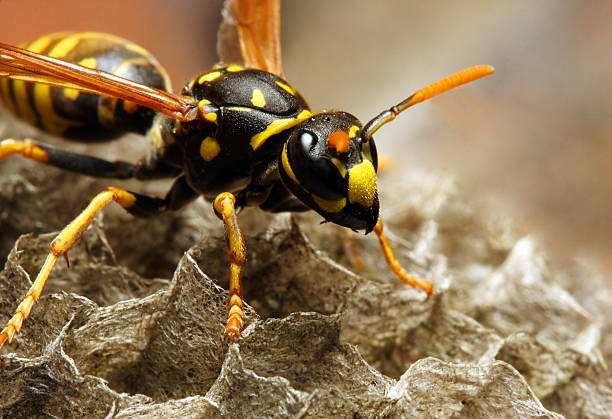
Wasps are one of those pests that tend to go unnoticed until things get out of hand. Unlike some insects that are hard to miss, wasps can quietly establish a colony in and around your home for weeks before you realise there’s a real problem. If you’ve spotted a few wasps here and there and brushed it off, you’re not alone — most Melbourne homeowners do the same. But those early signs can be your best chance to avoid a full-blown infestation. Getting on top of it quickly often means less disruption, less cost, and most importantly, less risk to you and your family. If things do escalate, professional wasp removal in Melbourne services are always the safest and most effective option.
Sign 1: You Keep Seeing Wasps in the Same Spot Around Your Property
Most people spot a wasp occasionally and think nothing of it. But if you’re noticing wasps repeatedly hovering or landing in the same area — especially near eaves, fence lines, garden sheds, or under decking — that’s worth paying attention to.
Wasps are not random wanderers. When they’re scouting a location, they tend to return to the same spots again and again. This repeated activity is often one of the very first signs that a nest is either being built nearby or has already been established.
Keep an eye on where the wasps seem to be coming from and going back to. If it’s a consistent flight path in and out of a specific point — a gap in the fascia board, a hole in a wall, or a crack in a fence post — that’s a strong indicator that something is going on behind the surface.
Don’t try to block the entry point yourself. Sealing wasps inside a cavity can cause them to chew through walls or other materials to find a new exit, which can make things significantly worse.
Sign 2: A Faint Buzzing Sound Coming from Walls or the Ceiling
This one catches a lot of homeowners completely off guard. You might be sitting in your lounge room or kitchen and notice a low, persistent buzzing noise coming from inside the wall or ceiling cavity. It might not be loud, and it might come and go — but if it’s consistent, it’s something to investigate.
Wasps are surprisingly active inside their nests, and when a colony grows large enough, the collective sound of their movement and wing activity can travel through walls, particularly if the nest is built against a surface cavity inside your home.
Many homeowners mistake this for a plumbing noise, an appliance hum, or even electrical buzzing. It’s an easy mistake to make. But if the sound is coming from a section of the wall that has no pipes or wiring running through it, a wasp nest is a very real possibility.
Do not knock on the wall or try to locate the nest by cutting into the surface. Disturbing a hidden nest can trigger an aggressive response from the colony very quickly.
Sign 3: Small Papery or Mud-Like Structures Appearing Around Your Home
Wasp nests don’t always look like the large, obvious papery structures you might picture. In their early stages, nests can be quite small — about the size of a golf ball or even smaller. They’re often tucked away in places most people don’t regularly look.
Common spots include under guttering, behind shutters, inside outdoor light fixtures, beneath timber decking, in garden letterboxes, or under the lip of outdoor furniture. Mud wasps, which are common in Melbourne, tend to build narrow tube-like mud structures along walls, under eaves, or in sheltered corners.
If you notice any small, papery, honeycomb-like structure or clay-coloured mud tubes forming anywhere on your property, don’t touch or disturb them. Even a nest that appears dormant or inactive can still contain wasps that will react defensively if they sense a threat.
Catching a nest at an early stage — before it grows into a larger colony — is genuinely the ideal time to have it dealt with professionally.
Sign 4: Chewed or Damaged Timber Around Your Home
This one often gets attributed to termites or general weathering, but it can actually be a sign of wasp activity. Certain species of wasps — particularly paper wasps — collect fibres from dry, weathered timber to create their nests.
You might notice small areas of fencing, decking, timber window frames, or garden furniture that look like they’ve been scraped or chewed along the grain. The surface can appear rough, lighter in colour, or slightly worn down in patches.
If you’re also seeing increased wasp activity in the same area where the timber damage is appearing, the two are very likely connected. It’s the wasps sourcing their building material from your property, which means their nest is probably very close by.
This is an easy sign to overlook, especially on older properties where timber wear is fairly normal. But if the damage is fresh and patchy rather than gradual and even, it’s worth looking around for a nest nearby.
Sign 5: Increased Wasp Activity When You’re Eating or Drinking Outdoors
Wasps are drawn to food and sugary drinks, which is why you’ll often notice them circling around outdoor meals, rubbish bins, fallen fruit, or barbecues. A few wasps around a summer BBQ is not unusual. But if the number seems higher than you’d expect, or if they’re becoming persistent or aggressive, it could mean a colony is active nearby.
When a nest is established close to your home, the worker wasps range outward in search of food, which brings them into contact with your outdoor living areas more frequently. The closer the nest, the more wasps you’re likely to encounter around food sources on your property.
Pay attention to whether this activity seems to be concentrated in a particular part of your yard. Wasps tend to forage in a radius from their nest, so repeated activity near a specific area — like near the garden shed, under the pergola, or along the back fence — can help narrow down where a nest might be.
Avoid swatting at them. Wasps release a chemical signal when threatened that can prompt nearby wasps to become aggressive.
What to Do When You Spot These Warning Signs
If you’ve noticed one or more of these signs around your property, the most important thing you can do is avoid disturbing the suspected nest and call a professional sooner rather than later.
Trying to remove a wasp nest yourself — with sprays, fire, water, or blocking entry points — is genuinely dangerous. Wasps can sting multiple times, and a disturbed colony can become extremely aggressive within seconds. For people with allergies, this can be a medical emergency.
A licensed pest control technician has the protective equipment, the training, and the right treatments to safely locate and remove the nest with minimal risk to your household. They’ll also check for secondary nests and advise on steps to reduce the likelihood of wasps returning.
The earlier you act, the easier the job — and the safer your home.
🐝 Noticed Something That Doesn’t Seem Right? Give Us a Call.
At Wasp Control in Melbourne, we’ve helped thousands of homeowners across Melbourne deal with wasp problems safely and efficiently — from small early-stage nests to large established colonies. Our experienced technicians use eco-friendly, family-safe methods and are available 7 days a week for prompt response.
We proudly service Oakleigh, Blackburn South, Northcote, Pascoe Vale, Glen Waverley, Cranbourne, Carlton, Brunswick East, North Melbourne, Docklands, Tullamarine, Yarrambat and many other suburbs across Melbourne.
Don’t wait for a small problem to become a big one. Call us today on 03 9021 3738 for an obligation-free quote and same-day service where available.